- 5167 + containers delivered
- Serving San Benito County
Santa Cruz conditions
Santa Cruz placement takes more planning
Older homes around Santa Cruz often sit close to the sidewalk, with short driveways, mature trees, retaining walls, and utility features limiting a truck's approach. In neighborhoods near the Westside and Downtown, a container may need careful alignment so residents, bicycles, and parked vehicles can still pass. Tell us whether the planned surface is asphalt, concrete, pavers, or compacted soil. We can then discuss the safest placement and whether protection beneath the container makes sense for the property.
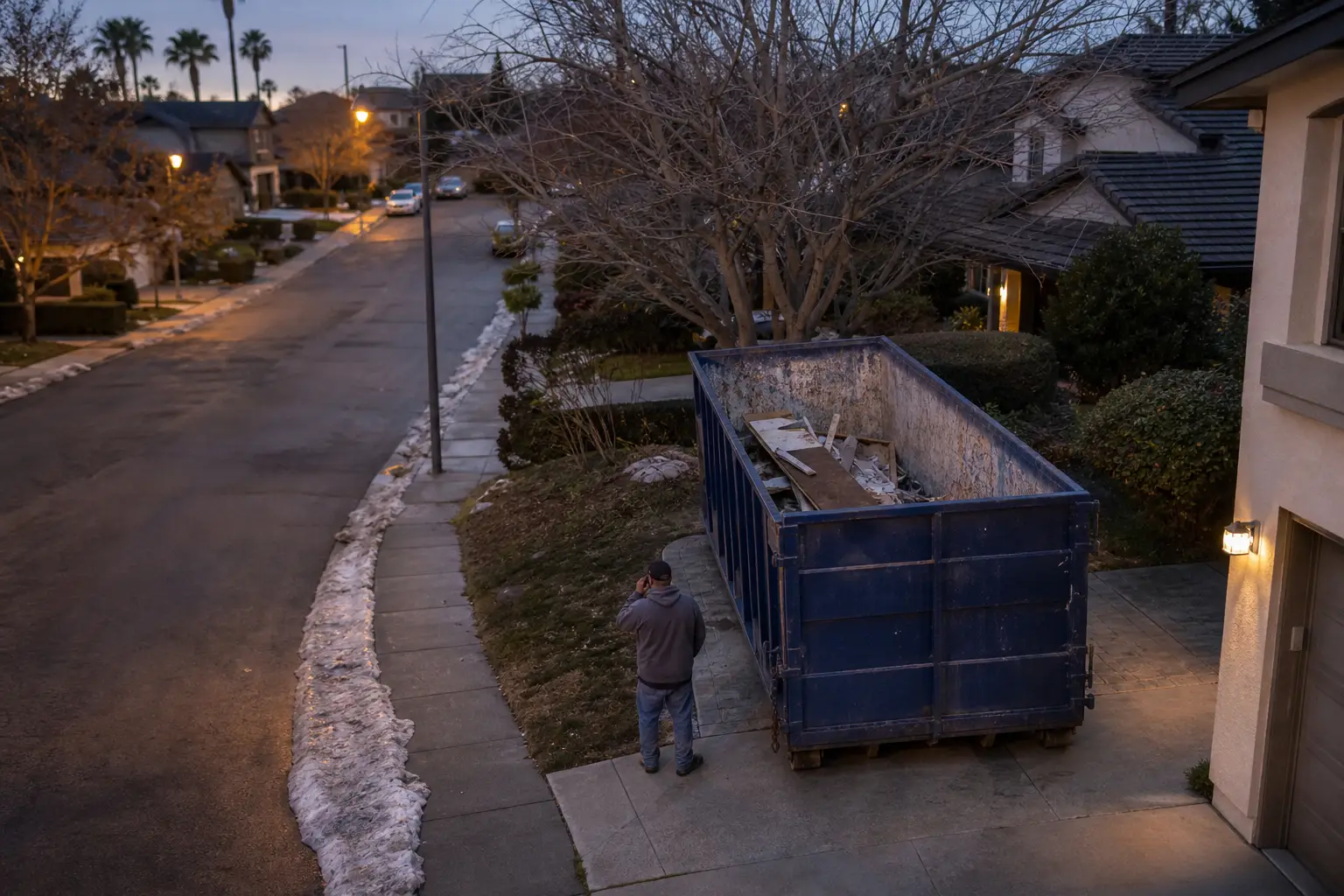
The city’s coastal exposure brings salt air, wet winters, and occasional heavy rain that can affect loose cardboard, soil, green waste, and other materials. Hillside streets can also introduce grades that change how a truck approaches and sets the container down. A location that looks open from the driveway may still be difficult because of overhead branches, low wires, gates, or a tight turn from the street. Photos and measurements of the access path help us catch those issues before dispatch.
Santa Cruz work ranges from compact bungalow updates to larger renovation and commercial projects along busy corridors. The container should sit close enough to the loading area to reduce carrying distance, but not where excavated soil, roofing tear-off, or broken masonry creates an unsafe pile. If the container must occupy a public street, town permission may apply. Explain the location, project material, and preferred schedule so we can discuss what is practical.
Material and weight
Older Santa Cruz homes change the size decision
A container that fits the volume may still be wrong for the weight. Santa Cruz homes built in earlier eras can produce plaster, lath, tile, brick, dense cabinetry, and layers of flooring during renovation. Those materials take less space than a loose household cleanout but add weight quickly. A bathroom tear-out may need a smaller container than a whole-house decluttering job, even when the debris pile looks similar. Roofing tear-off, concrete, soil, and masonry deserve the same caution. Describe the material rather than estimating only by bags or rooms. That lets us recommend a size that leaves loading room without creating an unsafe heavy load.
Driveway patterns matter just as much as the debris. Narrow lots near the coast may have little turning room, while hillside properties can have grades, retaining walls, and gates that restrict placement. Newer commercial or multifamily work may offer more open access but require coordination around employees, tenants, deliveries, and shared parking. Keep debris below the top edge, distribute dense material instead of concentrating it at one end, and protect the approach from loose nails or broken tile. If a cheaper, smaller container genuinely fits the material and access, that is the direction we will explain.
Common project sizes
Santa Cruz projects need the right container
These options cover common residential cleanup work around Santa Cruz, while the final recommendation depends on material, access, and where the container can sit.
Residential Cleanout Dumpsters
Clear older Santa Cruz homes, apartments, or accessory spaces without stacking debris along a narrow driveway. We help separate bulky household material from heavy masonry before selecting a workable container size.
Home cleanoutsHome Renovation Dumpsters
Kitchen, bath, and flooring work in Santa Cruz can produce dense debris quickly. Plan for cabinets, tile, drywall, and wood while accounting for tight side yards and limited curb space.
Remodel debrisYard Waste Dumpsters
Santa Cruz yard work may involve branches, soil, roots, and storm debris. Keep the load within the allowed material plan, especially on sloped lots where carrying and loading access can be difficult.
Yard projectsMoving and Garage Cleanouts
Moving from a Santa Cruz bungalow or clearing a crowded garage calls for room for furniture, boxes, and household discards. We can review driveway width and overhead clearance before delivery.
Moving cleanupEstate Cleanout Dumpsters
Estate work in established Santa Cruz neighborhoods often combines furniture, appliances, boxes, and renovation leftovers. Sorting the heavier material separately helps prevent an overloaded container and awkward hand loading.
Estate projectsSame-Day Dumpster Rental
A Santa Cruz cleanup sometimes changes suddenly after a property handoff or storm. Same-day availability depends on container location, truck access, and current scheduling, so share the full site details first.
Urgent cleanup
Practical answers
Questions about Dumpster Rental Santa Cruz
What size dumpster fits a Santa Cruz bathroom remodel?
A 10 Yard container often fits a small Santa Cruz bathroom update, closet cleanup, or limited flooring removal, but tile, plaster, cabinets, and masonry can make the load heavy before the container is full. Describe the materials and show the driveway or side-yard access. Older homes near Downtown and the Westside may have tight placement, so clear gates, vehicles, and overhead branches before delivery.
Can a dumpster go in a Santa Cruz driveway?
Yes, a dumpster can often sit in a Santa Cruz driveway when the surface, width, grade, and truck approach are suitable. Concrete, asphalt, pavers, and compacted soil each present different placement concerns, while hillside driveways may limit safe positioning. Measure the approach and tell us about retaining walls, gates, branches, and utility lines. Keep the area clear before the scheduled window.
Does Santa Cruz weather affect dumpster placement?
Santa Cruz rain, coastal moisture, and occasional strong weather can affect exposed cardboard, green waste, soil, and loose debris. Place the container where runoff will not wash material toward a drain or neighboring property, and secure lightweight items during loading. Tell us if the site is near the shoreline, on a slope, or exposed to winter weather so the placement plan accounts for those conditions.
Can I rent a dumpster for roofing debris in Santa Cruz?
Yes, roofing projects in Santa Cruz can use a dumpster when the material and loading method are discussed before delivery. Shingles are dense and can reach a safe weight limit before the container looks full, especially during older-home reroofing. Keep tear-off contained, do not overfill above the rim, and explain the roof area, access route, and ground surface before scheduling.
How do delivery and pickup work on a narrow Santa Cruz street?
Delivery and pickup on a narrow Santa Cruz street depend on truck clearance, parked vehicles, traffic movement, overhead obstacles, and the planned container position. We confirm the delivery and pickup windows by text so the site can be ready for access. Walk the truck route, note signs or street restrictions, and explain whether the container will sit on private property or the public roadway.
Before delivery
Prepare the Santa Cruz site before scheduling
- Measure the Santa Cruz driveway, gate, overhead branches, and turning path from street to placement.
- Move vehicles and loose tools so the truck can approach without crossing a crowded Santa Cruz work area.
- Tell us whether the surface is asphalt, concrete, pavers, soil, or a sloped driveway.
- Separate tile, concrete, soil, roofing, and other dense material from lighter Santa Cruz cleanup debris.
- Confirm whether the container will sit on private property or require permission for a public street.
Get the Santa Cruz placement plan right
Have the project material, preferred container location, access measurements, and desired schedule ready. Lorcan Dumpster Rental can explain the size and placement tradeoffs for your property 24/7, Monday to Sunday.
Click Here to Call(831) 537-2882Local routes
We plan access across Santa Cruz
Lorcan Dumpster Rental serves Santa Cruz properties from Hollister, with access planning for compact residential streets, coastal neighborhoods, hillside lots, and commercial corridors. Tell us the nearest cross street, the placement surface, and the material being loaded. That information helps us assess the route and coordinate a practical container position for your project.